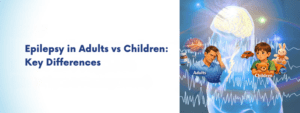
Epilepsy in Adults vs Children: Key Differences
Epilepsy in Adults vs Children: Key Differences Epilepsy is a neurological disorder characterized by recurrent, unprovoked seizures, and it can affect people at any stage
appointments@cncmail.in
Epilepsy is a neurological disorder characterized by recurrent, unprovoked seizures, and it can affect people at any stage of life. As a major brain disorder treated at advanced neurology hospitals in Hyderabad, epilepsy commonly presents in early childhood and again in older adulthood. According to CDC estimates, around 3.4 million people in the United States were living with active epilepsy in 2015, including approximately 470,000 children and 3 million adults.
Although seizures arise from abnormal electrical activity in the brain, epilepsy differs significantly between children and adults in terms of causes, symptoms, diagnosis, treatment strategies, and long-term outcomes. At specialized neurology clinics in and neurology departments, these differences guide individualized epilepsy treatment plans for patients of all ages.
Seizure manifestations vary widely depending on age and underlying brain physiology.
Children often experience seizure types that are less common in adults. Absence seizures, marked by brief episodes of staring or “spacing out,” are frequently seen in pediatric patients and are commonly evaluated by a neurology specialist using EEG testing. Myoclonic seizures (sudden muscle jerks) and atonic seizures (sudden loss of muscle tone or “drop attacks”) are also more prevalent in children.
Infants and young children may experience febrile seizures related to fever. While alarming, these are usually benign and not classified as epilepsy. Pediatric epilepsy doctors closely monitor children with recurrent seizures to differentiate epilepsy from transient seizure disorders.
In adults, epilepsy most often presents as focal seizures, which originate in a specific part of the brain. Adult-onset epilepsy is frequently associated with structural brain conditions such as stroke, brain tumors, head injury, or neurodegenerative diseases. As a result, adults may first present to a stroke hospital or neurology hospital with symptoms such as sudden weakness in one side, loss of balance while walking, frequent dizziness, or brain fog symptoms.
Adult seizures may begin with an aura such as unusual smells, visual changes, or numbness in hands and legs before progressing to generalized convulsions. These warning signs often prompt evaluation by an experienced neurologist in Hyderabad
Accurate diagnosis is essential for effective epilepsy and seizure treatment. Both children and adults undergo comprehensive evaluation at a top neurology hospital in Hyderabad, but diagnostic priorities differ.
In children, diagnosis emphasizes developmental history, birth complications, and early neurological milestones. Pediatric neurologists rely heavily on caregiver observations and often recommend:
Because seizures may affect learning and behavior, pediatric patients are often assessed for memory loss causes, attention difficulties, and other neurodevelopmental concerns.
In adults, neurologists focus on identifying acquired causes of seizures. Diagnostic evaluation includes:
A first seizure in adulthood often triggers urgent assessment at a neurology hospital in Hyderabad or other tertiary care center to rule out stroke, requiring rapid thrombolysis treatment if indicated.
Anti-seizure medications remain the first-line epilepsy treatment in children, with careful attention to cognitive and behavioral side effects. Pediatric neurologists adjust doses frequently to account for growth and brain development.
For drug-resistant epilepsy, children may benefit from:
Early intervention is critical to prevent long-term learning difficulties and developmental delays.
In adults, epilepsy treatment must account for comorbid neurological disorders such as migraine, Parkinson’s disease, or stroke. Many patients evaluated by a best neurologist in Hyderabad may also present with:
Medication selection considers drug interactions, driving restrictions, and occupational safety. Adults with refractory epilepsy may require surgical intervention or long-term care in a Neuro ICU.
Approximately one-third of epilepsy patients children and adults do not achieve seizure control with medication alone. These patients are referred to advanced neurology hospitals offering:
Comprehensive epilepsy care often overlaps with stroke ICU, paralysis treatment, and brain disorder treatment programs, particularly in adults with complex neurological conditions.
Many childhood epilepsy syndromes have a favorable prognosis, with seizures resolving during adolescence. However, children with underlying brain abnormalities may continue to require long-term neurological care.
Adult-onset epilepsy is more often chronic, particularly when related to stroke or degenerative disease. Patients treated at a top neurology hospital in Hyderaabad benefit from early intervention and coordinated long-term management.
Children with epilepsy face challenges related to learning, behavior, and social integration. Frequent seizures can affect academic performance and emotional development, requiring coordinated care between neurologists, educators, and families.
Adults may experience employment limitations, driving restrictions, and mental health challenges. Many adults evaluated by a senior neurologist also report symptoms such as loss of balance, memory issues, and anxiety related to unpredictable seizures.
Epilepsy presents differently across the lifespan, requiring age-specific diagnosis and treatment strategies. Children often experience epilepsy related to genetic or developmental factors, while adults commonly develop epilepsy due to acquired brain injury, stroke, or neurodegenerative disease.
At a comprehensive top neurology hospital in Hyderabad, multidisciplinary teams including neurologists, epilepsy doctors, stroke specialists, and neuro rehabilitation experts play a critical role in optimizing outcomes. Whether managing pediatric epilepsy or adult seizure disorders, personalized care delivered by the best neurologist is essential for improving quality of life and long-term neurological health.
Epilepsy in Adults vs Children: Key Differences Epilepsy is a neurological disorder characterized by recurrent, unprovoked seizures, and it can affect people at any stage

How Dementia & Alzheimer’s Disease Progress (Early Signs & Management) How Dementia & Alzheimer’s Disease Progress (Early Signs & Management) If someone you care about
How TAVI Has Changed Treatment for High-Risk Heart Patients Severe aortic stenosis is a serious heart condition that can become life-threatening if left untreated. It
Understanding the Two Major Types of Stroke: Ischemic and Hemorrhagic Strokes occur when the brain’s blood supply is suddenly disrupted, causing brain cells to die