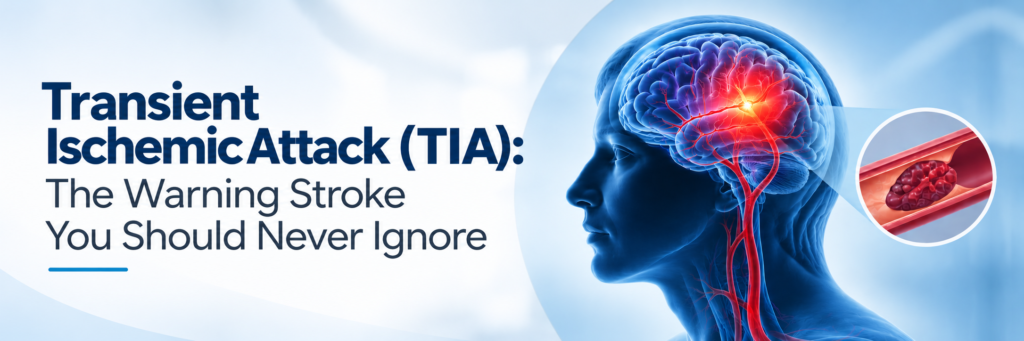
Transient Ischemic Attack (TIA): The Warning Stroke You Should Never Ignore
A sudden episode of weakness, numbness, difficulty speaking, vision changes, or dizziness may last only a few minutes and then

@Banjarahills – 94949 84747 @Trimulgherry – 90529 84747
@Uppal – 99855 84747
A sudden episode of weakness, numbness, difficulty speaking, vision changes, or dizziness may last only a few minutes and then disappear. It can be easy to assume that the problem has passed and there is nothing to worry about.
However, these temporary symptoms may be caused by a Transient Ischemic Attack (TIA), sometimes called a “mini-stroke.” A TIA occurs when blood flow to part of the brain is temporarily disrupted, causing sudden neurological symptoms. Although the symptoms may resolve, a TIA can be an important warning sign of a future stroke.
At Citi Neuro Centre, patients with suspected TIA and stroke symptoms can receive specialized neurological evaluation and emergency care. Early assessment can help identify the underlying cause and reduce the risk of a future stroke.
Understanding the warning signs of TIA is an important step toward timely neurological care.
A Transient Ischemic Attack (TIA) happens when blood flow to part of the brain is temporarily blocked or reduced. The brain requires a continuous supply of oxygen-rich blood to function normally. When that blood supply is interrupted, neurological symptoms can develop suddenly.
Unlike a completed stroke, the symptoms of a TIA may resolve within minutes or hours. However, it is not possible to reliably determine at home whether symptoms are due to a TIA or an ongoing stroke.
This is why sudden neurological symptoms should always be treated as a medical emergency, even if they disappear.
A TIA usually occurs when a blood vessel supplying the brain becomes temporarily blocked.
Common causes include:
Identifying the cause of a TIA is important because appropriate treatment can help reduce the risk of another TIA or a future stroke.
TIA symptoms usually appear suddenly and can be similar to those of a stroke.
One side of the face may suddenly droop or feel numb. The person may have difficulty smiling normally or notice that one side of the mouth has changed.
Weakness or numbness may occur suddenly, particularly on one side of the body.
A person may suddenly experience:
Temporary loss of vision, blurred vision, or double vision may occur.
Some people may experience sudden dizziness, difficulty walking, loss of coordination, or problems maintaining balance.
A sudden, unusual headache, especially when associated with other neurological symptoms, requires urgent medical evaluation.
The warning signs of TIA and stroke can be remembered using B.E. F.A.S.T.
B – Balance: Sudden loss of balance or coordination
E – Eyes: Sudden vision changes
F – Face: Facial drooping or numbness
A – Arms: Sudden weakness or numbness
S – Speech: Difficulty speaking or understanding
T – Time: Seek emergency medical attention immediately
If any of these symptoms occur, do not wait to see whether they improve.
Even if the symptoms disappear, urgent medical assessment is still necessary.
TIA and stroke can produce very similar symptoms.
The main difference is that a TIA involves a temporary interruption of blood flow, with symptoms resolving, while a stroke can result in lasting brain injury.
However, the symptoms alone cannot reliably tell you whether you are experiencing a TIA or a stroke.
For this reason, anyone experiencing sudden facial weakness, limb weakness, speech difficulty, vision changes, or other neurological symptoms should receive emergency medical evaluation.
A TIA should never be considered harmless simply because the symptoms disappear.
Several factors can increase the risk of TIA and stroke.
These include:
Some of these risk factors can be managed through medical treatment and lifestyle changes. Controlling blood pressure, cholesterol, diabetes, and other underlying conditions can help reduce future stroke risk.
Because TIA symptoms can disappear before the patient reaches the hospital, diagnosis may require a detailed neurological assessment.
A neurologist may evaluate:
Brain Imaging: MRI or CT imaging may be recommended depending on the patient’s symptoms and clinical assessment.
Blood Vessel Imaging: Imaging of the blood vessels in the head and neck may help identify narrowing or blockages.
Carotid Ultrasound: A carotid ultrasound can help evaluate the blood vessels supplying the brain.
ECG and Heart Evaluation: An ECG may help identify abnormal heart rhythms such as atrial fibrillation, which can increase the risk of blood clots and TIA.
Blood Tests: Blood tests may be used to evaluate factors such as blood sugar and cholesterol.
One of the biggest misconceptions about TIA is that it is harmless because the symptoms disappear.
A TIA is better understood as a warning stroke.
The risk of a major stroke can be increased following a TIA, particularly in the period soon after the event. Prompt assessment allows doctors to identify the possible cause and begin appropriate preventive treatment.
If sudden neurological symptoms occur, seeking Emergency Stroke Care in Hyderabad without delay can be important.
Do not wait for the symptoms to return or become more severe.
A sudden episode of weakness, numbness, difficulty speaking, vision changes, or dizziness may last only a few minutes and then
Sleep is not simply a period of rest it is an essential neurological process that supports brain function, memory consolidation,
Golden Hour in Stroke: Why Immediate Treatment Saves Brain Cells A stroke doesn’t announce itself. It interrupts life mid-sentence, mid-step,
Brain Stroke Warning Signs: FAST Symptoms Explained Stroke remains one of the most time-critical medical emergencies, with outcomes directly linked
Treatment depends on the underlying cause of the TIA and the individual’s overall health.
Depending on the cause, doctors may prescribe medicines to:
Lifestyle changes may also be recommended, including:
In selected patients with significant narrowing of the carotid arteries, a procedure such as carotid endarterectomy may be considered to reduce the risk of future stroke.
Treatment is individualized according to the cause of the TIA, medical history, investigations, and overall stroke risk.
Not every TIA can be prevented, but managing modifiable risk factors can help reduce the risk of TIA and stroke.
Important preventive measures include:
Regular medical follow-up is particularly important for people who have already experienced a TIA.
Sudden neurological symptoms should never be ignored.
Seek urgent medical attention if you or someone around you develops:
Even when the symptoms disappear, a neurological evaluation is important to determine whether the episode could have been a TIA and to assess the risk of future stroke.
At Citi Neuro Centre, specialized neurological care focuses on the evaluation and management of stroke, TIA, and other neurological conditions.
Patients requiring Brain Stroke Treatment in Hyderabad can benefit from neurological assessment aimed at identifying the cause of symptoms and developing an appropriate treatment plan.
With specialized neurological expertise, diagnostic facilities, and access to Emergency Stroke Care in Hyderabad, timely evaluation can help patients receive appropriate care when neurological symptoms occur.
For patients looking for a neurovascular clinic in Hyderabad, early consultation can help identify vascular risk factors and guide appropriate preventive care.
A TIA may last only a few minutes, but its significance should not be underestimated.
Early neurological assessment can help:
Seeking timely care is particularly important because the symptoms of a TIA and an ongoing stroke can initially appear similar.

A Transient Ischemic Attack (TIA) is more than a temporary episode of weakness, numbness, speech difficulty, or vision changes. It can be an important warning sign that a person may be at increased risk of a future stroke.
Recognizing the symptoms and seeking immediate medical attention can make an important difference in identifying the cause and preventing future neurological complications.
If sudden neurological symptoms occur, do not wait for them to disappear. Seek emergency medical attention immediately.
If you are looking for specialized Brain Stroke Treatment in Hyderabad or neurological evaluation after a suspected TIA, timely consultation with a neurologist can help guide appropriate care.
Disclaimer: This article is intended for general health information and does not replace professional medical advice, diagnosis, or treatment. If you experience sudden symptoms suggestive of TIA or stroke, seek emergency medical attention immediately.
A Transient Ischemic Attack (TIA) is a temporary episode caused by reduced blood flow to the brain. It can be an important warning sign of a future stroke. If you experience TIA symptoms, seeking Brain Stroke Emergency Care in Hyderabad can help ensure timely neurological evaluation.
Common TIA symptoms include sudden weakness or numbness of the face, arm or leg, difficulty speaking, vision changes, dizziness and loss of balance. Recognising these Emergency Stroke Care Tips and seeking immediate medical attention can help reduce the risk of serious complications.
You should seek Emergency Stroke Care in Hyderabad immediately if you experience sudden facial weakness, arm or leg weakness, speech difficulties, vision problems or loss of balance—even if the symptoms disappear. Prompt evaluation is important because a TIA may precede a major stroke.
A neurologist may recommend brain imaging, blood vessel imaging, blood tests, heart evaluation and other investigations to identify the cause. Depending on the findings, treatment may include medications, lifestyle changes or procedures. Choosing a Best Neurology Hospital in Hyderabad can help ensure comprehensive neurological and stroke care.
Yes. A TIA can be a warning sign that a person is at increased risk of having a stroke. Timely evaluation, managing risk factors and following an appropriate treatment plan can help reduce future risk. Stroke recovery treatment in Hyderabad may also be recommended if a person subsequently experiences a stroke.
